
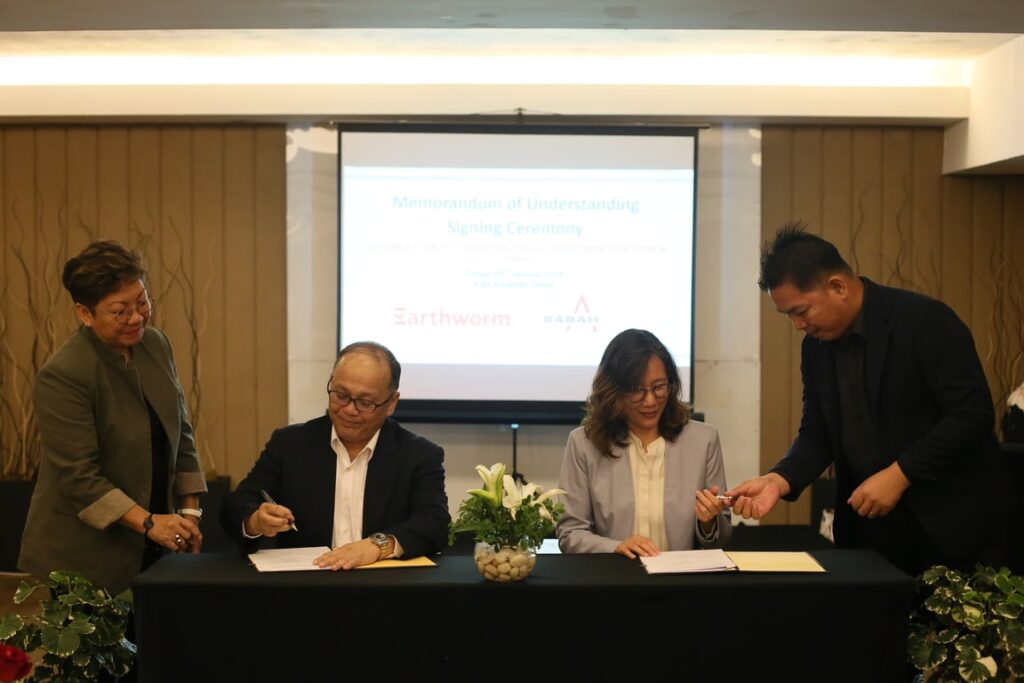
Kota Kinabalu, Sabah, 30 January 2026 – Earthworm Foundation and the Sabah Jurisdictional Approach for Sustainable Palm Oil (JASPO) today signed a Memorandum of Understanding (MoU) to collaborate on strengthening ethical recruitment practices across Sabah’s palm oil sector, with a particular focus on supporting smallholders and medium-sized palm oil producers. The collaboration aims to enhance labour recruitment processes in line with international labour standards and evolving industry expectations. The initiative supports the Sabah State Government’s broader mission to promote sustainable, inclusive, and responsible palm oil development.
Sabah remains highly dependent on migrant workers, particularly in labour-intensive sectors such as plantations, construction, and domestic work. While recent government initiatives to improve migrant worker registration and management have delivered positive progress, structural challenges and implementation gaps persist across recruitment and employment practices.
Earthworm Foundation brings experience from its ongoing work on ethical recruitment in Malaysia since 2019. In Sabah, this has included a research study on migrant worker recruitment and employment conducted in 2023, followed by a series of multi-stakeholder engagement sessions involving palm oil producers, government agencies, and international organisations. These efforts have helped identify practical challenges faced by employers, particularly smallholders and medium sized producers, in aligning recruitment practices with ethical and regulatory expectations.
Chairman of the JASPO Board of Directors, Datuk Darrel Webber, highlighted the importance of ethical recruitment in advancing Sabah’s sustainability agenda. “Ethical recruitment is a critical pillar of Sabah’s sustainable palm oil journey. This partnership reflects our commitment to strengthening labour practices in a way that is responsible, practical, and aligned with international standards, while recognising the realities faced by businesses on the ground” said Datuk Darrel.
Under the collaboration, Earthworm Foundation and Sabah JASPO will work together to develop practical recruitment guidelines tailored to Sabah’s local context. These guidelines will be aligned with international conventions and labour standards, with a focus on supporting effective and practical adoption by companies operating on the ground.
Malaysia Country Representative of Earthworm Foundation, Kiah Hui Ooi, emphasised the importance of context-specific solutions and multi-stakeholder collaboration. “Ethical recruitment is a critical foundation for responsible supply chains. Through this collaboration with Sabah JASPO, we are combining field experience, stakeholder perspectives, and policy alignment to develop guidance that is practical for companies to implement while remaining aligned with international labour standards. This effort also underscores the importance of closer collaboration among government, industry, and other stakeholders to strengthen responsible recruitment practices across Sabah’s palm oil sector.”
The event was also attended by the Sabah Jurisdictional Certification Steering Committee (JCSC) Labour Working Group members and representative from the Sabah State Internal Affairs and Research Office and Immigration Department of Malaysia – Sabah State.
This press release has been published on VRITIMES