
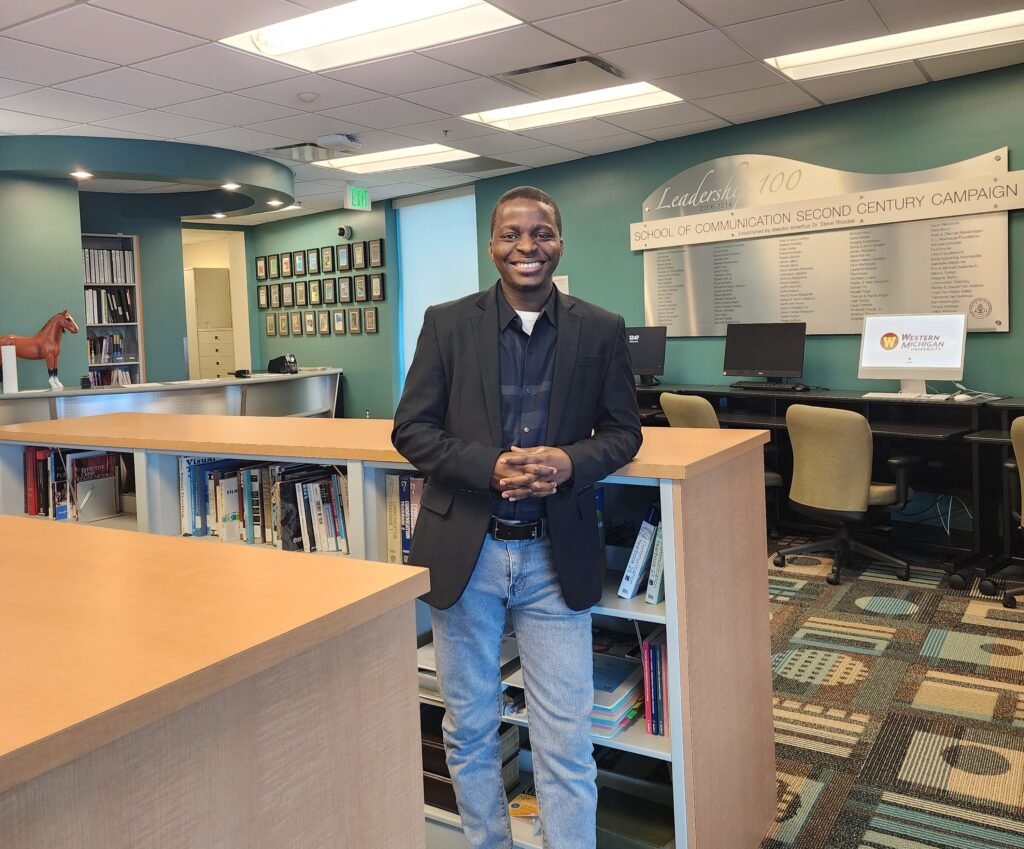
For almost 10 years, Diinsider has been conducting a global online learning program for changemakers, entrepreneurs, strategic comunications and media students who are passionte about creating social impact through storytelling. As of the moment, we have 200+ alumnis from 30+ countries, whom we call Diinsider’s global corresponndents. Today, we are thrilled to annouce that we have the great opportunity to look back and talk with some of them in our earlier years, and see how much they have grown in the past years. To kick start, we have the opportunity to talk with Habeeb Abdulrauf, who is orignally from Nigeria and currently actively internationally, to share his journey with us.
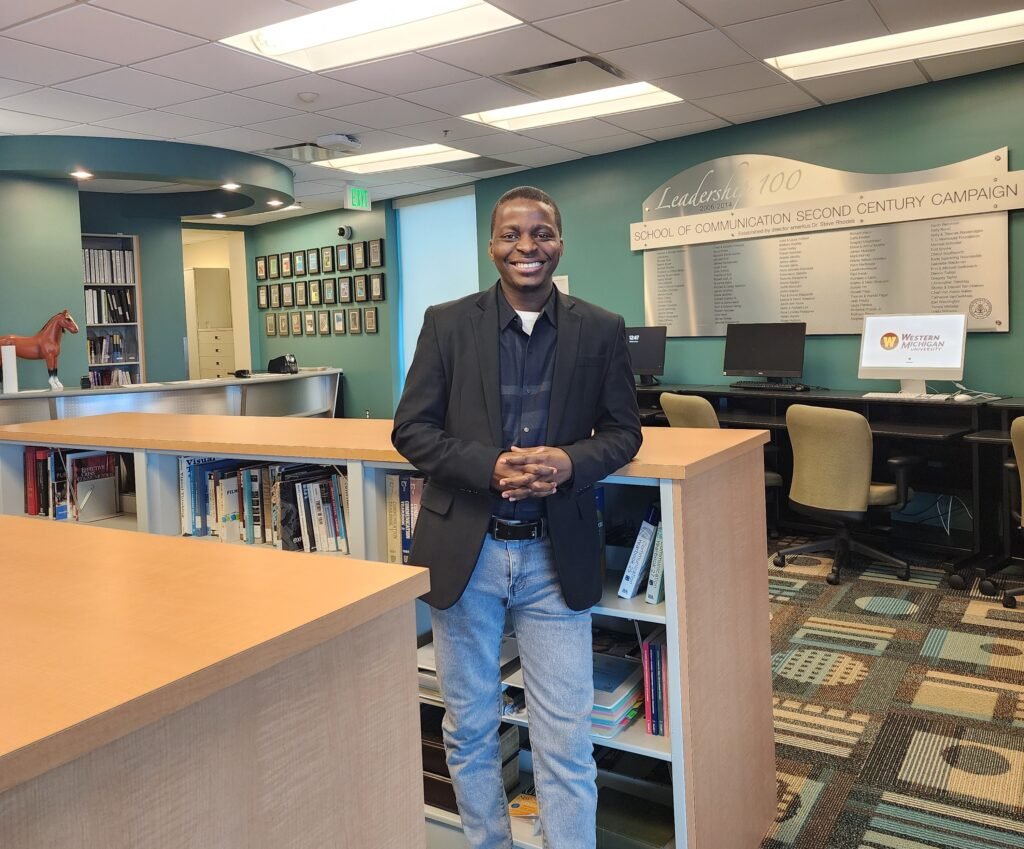
Question: Where are you in your career now, and why do you choose this career (e.g., health research/studying in US/etc)?
Habeeb: Currently, I am a graduate researcher and instructor of record at Western Michigan University, a public research institution in Kalamazoo, Michigan. I also serve as a lab instructor at the Communication and Social Robotics Lab, one of the few communication-based AI research labs of its kind in the United States. Beyond academia, I serve as an advisor and judge at World Technology Partners, a USA-based nonprofit that supports ICT and public health innovation through competitions, educational programming, and policy-centered events. I also serve as a judge for NASA’s GLOBE Program, which engages students and scientists worldwide in collaborative environmental research to promote STEM education and sustainability. Driven by a strong commitment to equity and social good, I founded the Digital Gen Foundation in 2020, at the heat of the COVID-19 pandemic. This nonprofit organization trains youth and women in grassroots communities across sub-Saharan Africa through digital literacy and tech skill development.
At the core of my work is a firm conviction that technology must first serve those it once excluded, transforming from a barrier into a bridge for equity and inclusion. I come from a part of the world where brilliance is fluid, but access is not. I’ve experienced firsthand how structural inequalities, especially in health and education, can rob entire communities of their potential. That’s why I’ve chosen to focus my research on how we can utilize accessible technologies, such as chatbots, low-power AI, and SMS-based systems, to enhance health outcomes for socially marginalized populations.
My work is grounded in the urgent reality that health literacy is one of the strongest predictors of well-being, yet millions of people globally lack access to timely, understandable, and actionable health information. According to the World Health Organization, low health literacy is a significant contributor to health disparities, particularly among low-income communities. Justifiably so, people with low health literacy are more likely to have poor health, higher rates of chronic disease, and a nearly 2-fold higher mortality rate as compared to people with adequate health literacy (Cavanaugh et al., 2008). But here’s the opportunity, most of these same people do have access to mobile phones, at worst, a feature phone. That changes everything. This urgency fuels my research into the use of low-power, accessible AI technologies, such as chatbots, SMS-based agents, and tiny machine learning to improve access to credible health information. With mobile phone access now widespread, even in underserved areas, I see a critical opportunity to advance health outcomes by designing culturally responsive, scalable, and lower-power AI tools tailored to the lived realities of people in grassroots communities. My goal is to ensure that technology isn’t only cutting-edge but also ethically grounded and socially responsive. I chose this path not because it was easy or trendy, but because I believe that human dignity should be the default in every innovation we create.
Question: In recent years, we have seen increasing expectations on AI to improve performance in health services (including reproductive health). In your opinion, what are the best paradigms or approaches in adopting AI for reproductive health (or other health services)? What can be the next point for making a breakthrough?
Habeeb: This is a powerful and timely question. While AI holds enormous promise for improving health systems, particularly reproductive health, the paradigm that matters most to me is not just technological, but human-centered. For AI to make a real and lasting impact, especially in reproductive health, it must be designed with, not just for, the people it aims to serve. This means engaging local communities, listening to women and young people, especially those from historically underserved regions, and co-creating solutions that reflect their realities, values, and linguistic and cultural nuances. Too often, health tech solutions are developed in distant labs, then dropped into communities without context. But reproductive health is deeply personal, highly contextual, and often tied to social norms, mistrust, and gendered inequalities. Therefore, if AI is to assist in this area, it must prioritize trust, privacy, accessibility, and cultural sensitivity over solely performance metrics.
This isn’t just theory for me; it’s something my friend, Abdulmalik, and I have recently explored through experimental research. In this study, we conducted an experimental study with 240 adolescents and young adults in Nigeria, evaluating an AI-powered sexual and reproductive health chatbot called Revida. The results were both affirming and enlightening as participants rated the chatbot highly in terms of trust, usefulness, clarity, and emotional support. Many valued Revida’s non-judgmental tone, the way it simplified complex health topics, and its capacity to offer confidential guidance, especially in a context where young people often face stigma or shame when seeking SRH information from a human professional. But notably, while youth saw Revida as a valuable first step, they didn’t perceive it as a replacement for human care. This highlights a critical truth that AI must extend care, not replace it. It should be a bridge, not a barrier, to more in-depth support, enabling youth to access credible information before they even set foot in a clinic. However, one promising approach is low-power, mobile-first AI, chatbots, and SMS-based systems that work on feature phones, which don’t require smartphones or internet connectivity. These can provide youth in rural or low-resource areas with real-time, accurate, confidential sexual and reproductive health information, while respecting their anonymity. In places where young people fear judgment from healthcare workers or lack access to a healthcare centre, this kind of AI can be life-changing. But it must be implemented with care, ethical oversight, and real community input.
As for the next breakthrough, it all lies at the intersection of AI explainability, data sovereignty, and prioritizing local data centers, as well as tiny, lower-power, and inclusive design. This not only fosters inclusivity but also promotes climate justice. Suppose we want people to trust AI systems with something as intimate as their health. In that case, we must make those systems transparent, able to explain their reasoning, adapt to local languages and norms, and protect user data with integrity. We also need to invest in building local capacity, training grassroots organizations, healthcare workers, and even young people themselves to co-create and manage these tools.
The future of AI in reproductive health should not be about replacing human care, but extending compassion and access through intelligent, empathetic systems. And to get there, we must stop asking only what AI can do and start asking, for whom, by whom, and at what cost?
Question: What are your plans after graduation?
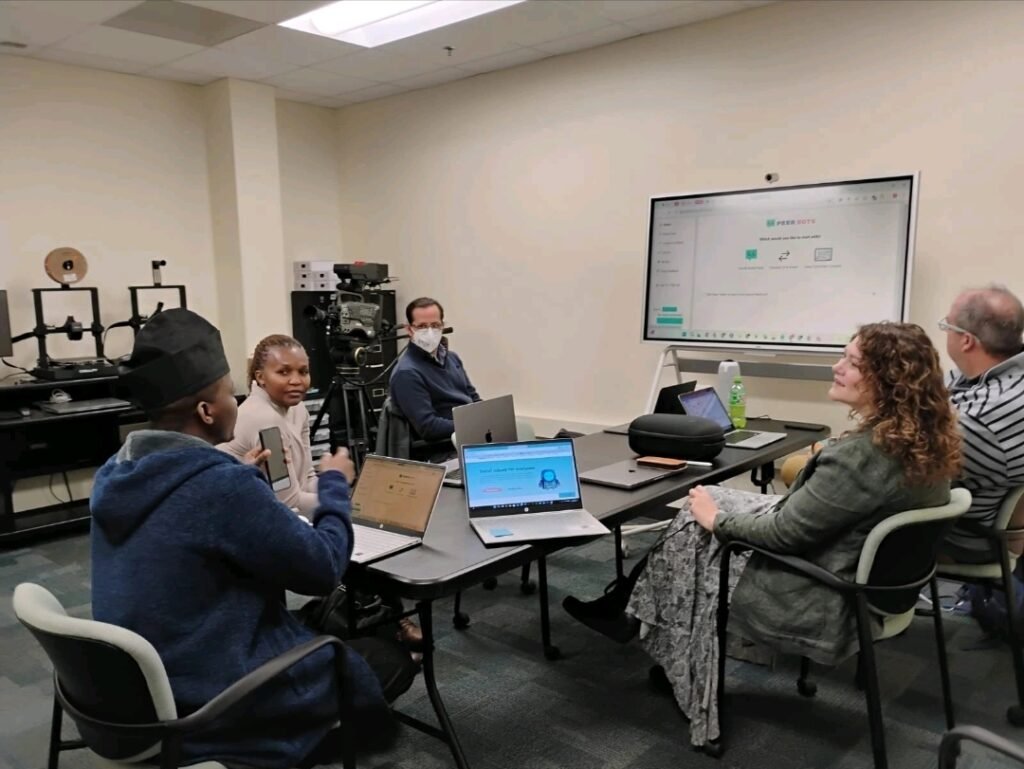
Habeeb: After graduation, I plan to teach courses on Artificial Intelligence and Human-Machine Communication at the university level, fostering student-centered teaching and equipping students with the technology for the future of work. I also plan to consult with organizations and companies that focus on designing low-power, socially responsible AI systems, particularly those aimed at advancing health equity. Beyond that, I will continue to engage in research focused on emerging technologies for good health and educational outcomes for marginalized communities worldwide.
Question: What is your best or most impressive memory from Diinsider’s experiences? What inspiration or wisdom from that experience has shaped your career today?
Habeeb: My most memorable experience as a volunteer global correspondent with Diinsider was discovering that journalism could be more than reporting news-worthy events. It could be a vehicle that opens and creates opportunity. It was a space where I sharpened my storytelling skills far beyond classroom lectures and exams, learning how to capture voices, issues, and ideas with depth and purpose. That experience became a bridge to the professional world for me. It enabled me to secure an internship at the Nigerian Shippers’ Council, a key federal agency in Nigeria’s capital. It was a catalyst and highlight of my profile, which opened the door to a formative internship at the Nigeria Shippers’ Council, a key federal agency at the heart of the nation’s capital, where I served as an online journalist and PR specialist. There, I covered stories on trade, logistics, and global shipping, building a network of professionals, leaders, and changemakers whose influence continues to shape my work today.
One story I covered during my volunteering at Diinsider was later featured in my university’s annual magazine, spotlighting not just my passion for research skills but also the social impact focus that continues to drive my work. The wisdom I carry forward from that time is that when you use your voice to spotlight others, you inevitably illuminate your own path. That belief continues to shape my career today, both in research, teaching, and technology innovation, reminding me that impact begins with listening, empathy, and amplifying the stories that matter.
Question: Anything else you would love to share with Diinsider’s audience?
Habeeb: If there’s one thing my journey with Diinsider taught me, it’s the fact that the impact of a platform is rarely confined to its size. it’s defined by the ripples it creates. Diinsider may appear to be a media platform, but in reality, it is a launchpad for global opportunities. In this organization, young storytellers, innovators, and changemakers discover their voice and learn how to use it to shift conversations in boardrooms, communities, and even across continents. What begins here as a story can grow into a movement; what starts as a news article can become an opportunity, a policy change, or a global connection. I am living proof of that. The network, confidence, and skills I built with Diinsider have shaped not just my career but my worldview.
To every reader, especially those just starting, never underestimate the power of telling the right story, at the right time, with the right intent, and on the right platform. Organizations like Diinsider remind me that even the most local voices can have global relevance, and that is where true change begins.
If my journey resonates with you and you think there are opportunities for us to collaborate, or if you’re passionate about sustainable and eco-friendly AI, health equity, or social impact, I’d be happy to chat. You can reach me on LinkedIn at https://www.linkedin.com/in/habeeb-abdulrauf/ or by email at habeeb.abdulrauf@wmich.edu .
Reference
Crossley , S. A. , Balyan , R. , Liu , J. , Karter , A. J. , McNamara , D. , & Schillinger , D. ( 2020). Predicting the readability of physicians’ secure messages to improve health communication using novel linguistic features: The ECLIPPSE study . Journal of Communication in Healthcare , 13 , 344 – 356 . 10.1080/17538068.2020.1822726. doi: https://doi.org/10.1080/17538068.2020.1822726
World Health Organization. (n.d.). Health literacy. World Health Organization. https://www.who.int/teams/health-promotion/enhanced-wellbeing/ninth-global-conference/health-literacy